

The 2nd European Outdoor Sports Education Summit brought together educators, researchers and outdoor sport professionals from across Europe in the Arctic setting of Kiilopää, Finland, reinforcing collaboration between the outdoor sport and higher education sectors. The event formed part of the growing European Outdoor Sports Campus initiative, which aims to strengthen excellence, innovation and shared standards in outdoor sports education across Europe.
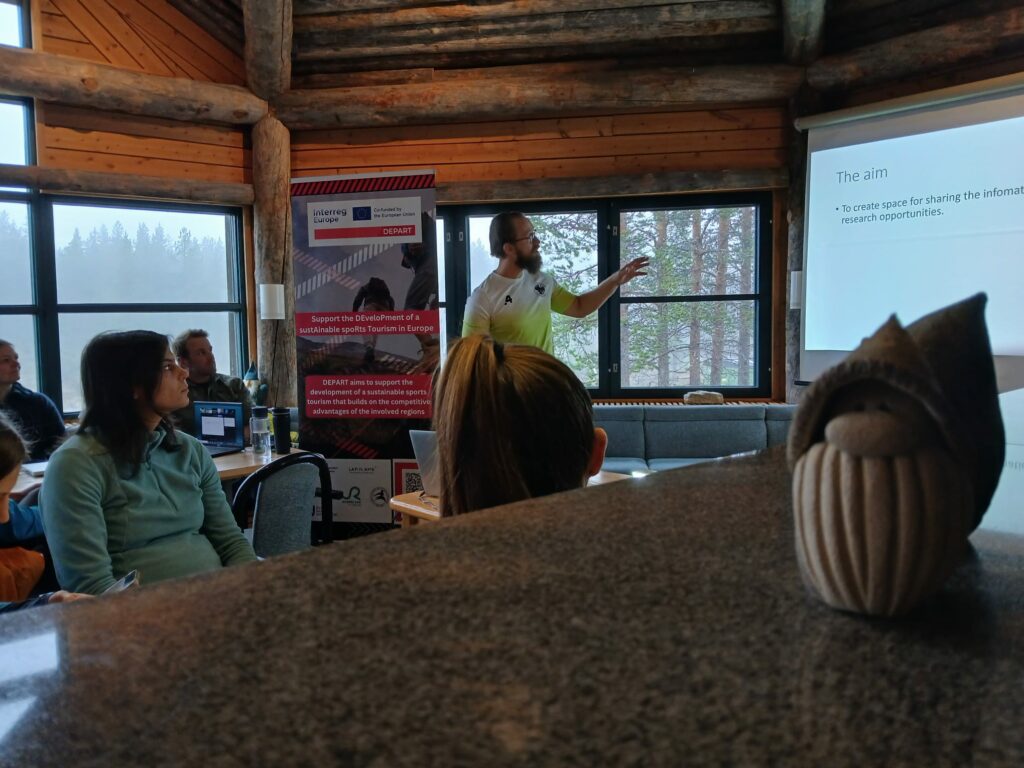
Hosted in Lapland, the summit combined academic exchange with immersive field-based learning, reflecting the campus’ core approach of linking theory, research and practical outdoor experience. Participants engaged in workshops, research discussions and outdoor activities recognized as central to developing modern, sustainable and inclusive outdoor education systems.
Strengthening a European Education Network
Launched in 2022, the European Outdoor Sports Campus supports Erasmus+ learning opportunities and aligns with the ambitions of the European Education Area. Following the first summit in France in 2023, the campus has expanded through staff and student exchanges, blended programmes, webinars and joint projects, forming a more integrated European network of outdoor sports education providers.
The Kiilopää summit further consolidated this network. A total of 27 participants representing 16 organisations, including universities, research institutions and vocational training providers, took part. Eleven of the organisations were new to the campus network since 2023, signalling continued growth and diversification of the partnership base.
Governance within the campus is also evolving. The steering committee is transitioning into an ENOS “education experts group,” with five new members joining, broadening representation from higher education, vocational training and private sector actors across Europe.
Workshops Focus on Sustainability, Inclusion and Leadership
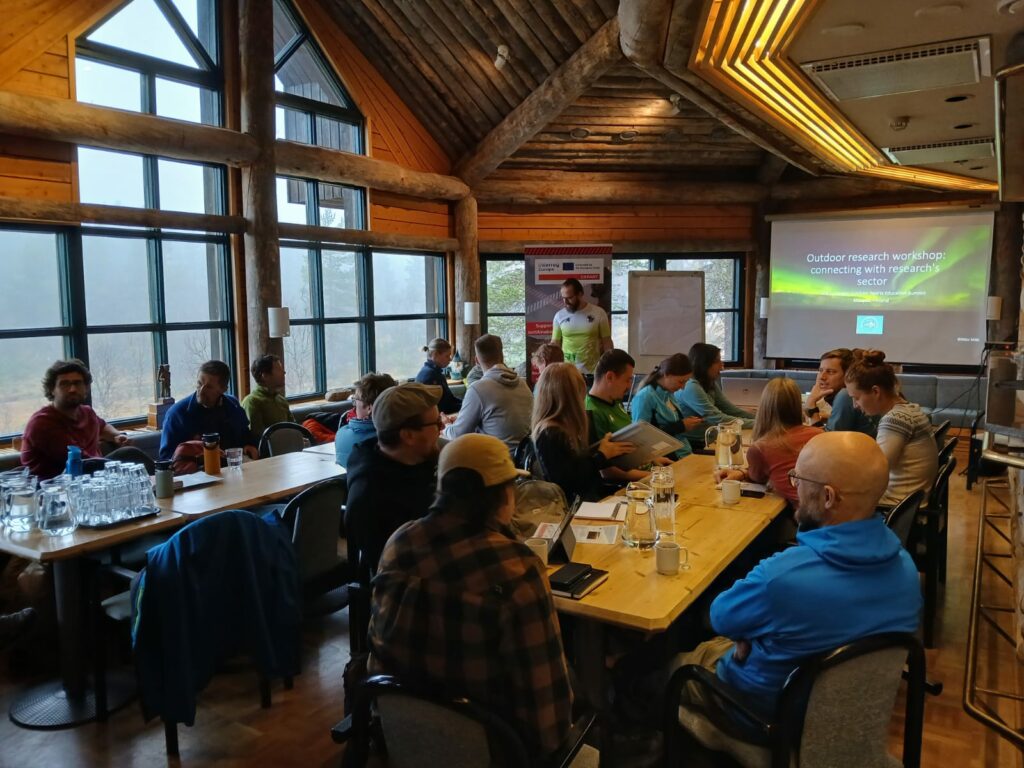
Workshop sessions explored a holistic framework for responsible leadership, group management and environmental interaction in outdoor education. Four key themes structured the programme:
- Sustainability, with emphasis on balancing ecological and cultural priorities, clear educational purpose and personal well-being.
- Inclusion and ethics, focusing on empathy, emotional intelligence and trust-building within groups.
- Risk management, extending beyond physical safety to emotional and social dimensions, framed as a learning cycle.
- Nature connectedness, addressing how to deepen engagement with natural environments while minimising impact.
Across these themes, self-awareness and emotional intelligence were highlighted as foundational competencies for outdoor educators.
Research, Mobility and Programme Development
The summit strengthened ongoing Erasmus+ Blended Intensive Programme (BIP) partnerships, which combine online collaboration with physical mobility. Participants reported gains in practical skills and intercultural understanding through Arctic fieldwork, while institutions reinforced links for future research and joint curriculum development. Monthly online meetings are supporting a growing research cooperation network.
Several initiatives were highlighted or advanced:
- A third Nature Connectedness BIP planned in France in 2026.
- Continued implementation of the SEE project and expanded staff, teacher and student exchanges.
- Development of research cooperation structures and commitment to evidence-based practices in outdoor education and well-being.
- New programme developments, including a Master of Science in Sustainable Outdoors under Erasmus Mundus, involving Lapin AMK, the University of Edinburgh and the University of South-Eastern Norway.
- Participation in projects linked to vocational excellence and broader European funding calls.
From Arctic Field to European Strategy
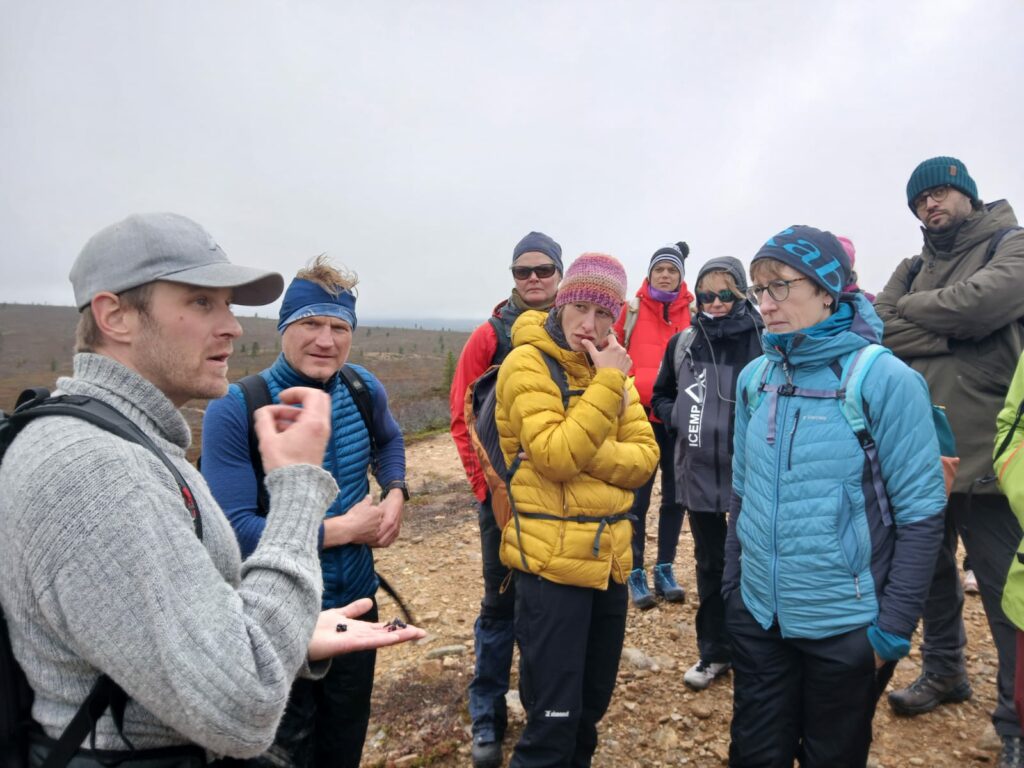
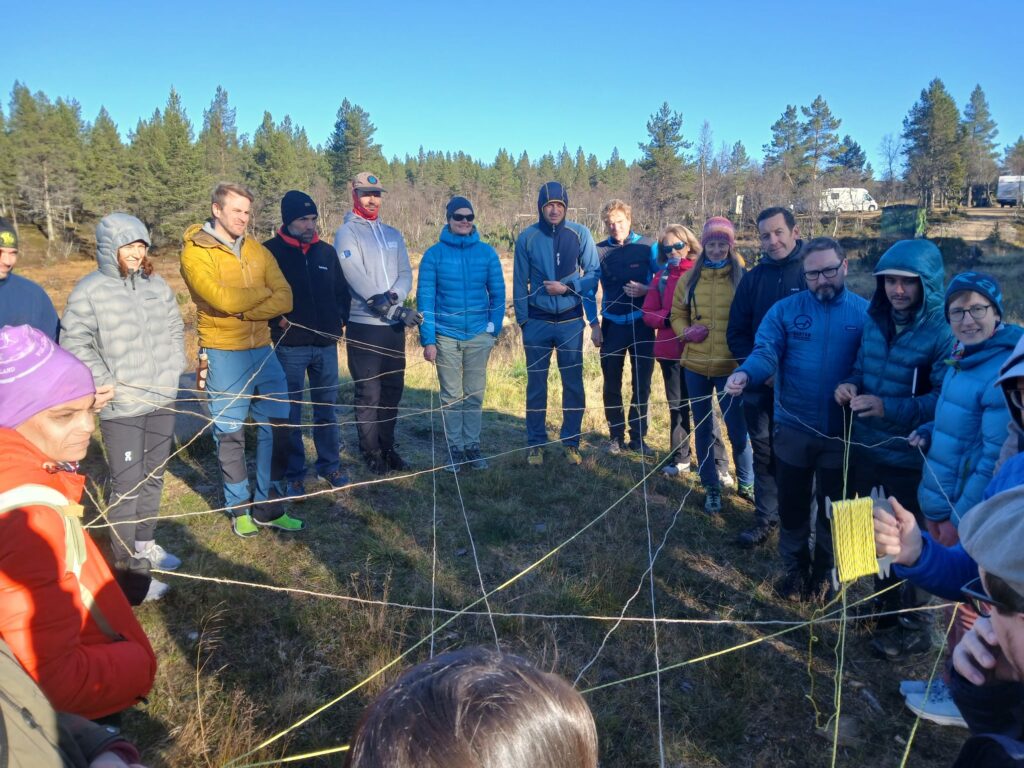
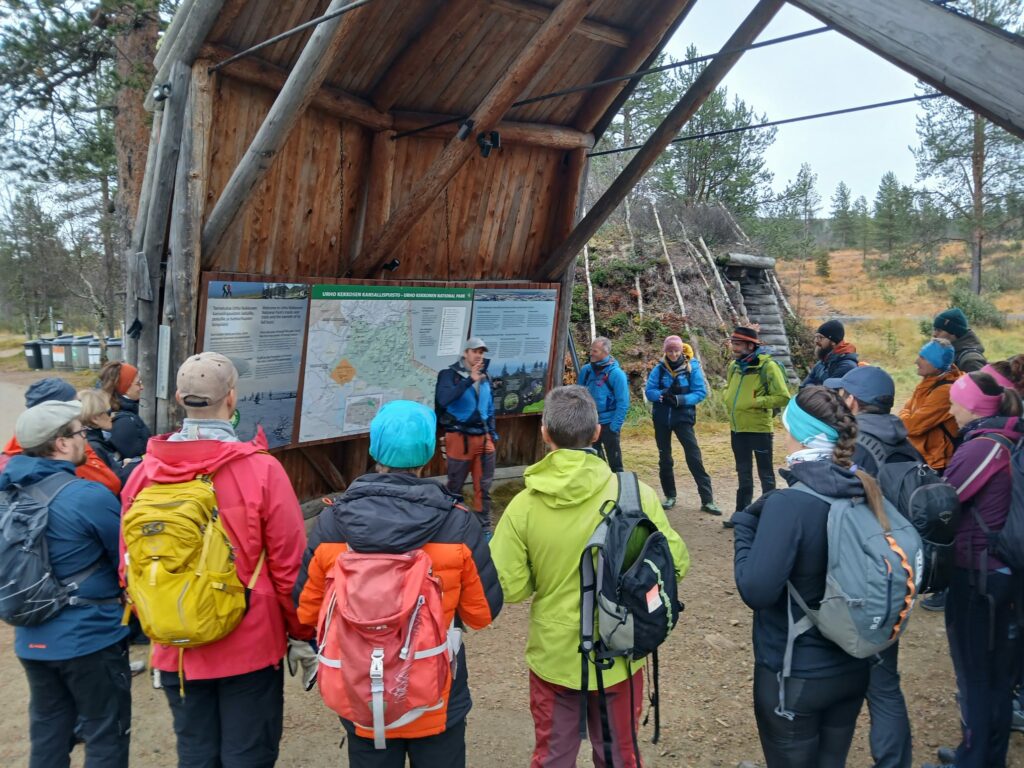
The summit programme reflected this blend of field and strategy. Activities ranged from orienteering workshops in forest terrain and hiking discussions in Lapland landscapes to research sessions on nature, sustainability and comparative outdoor physical activity education in Europe. Cultural elements, including engagement with Nordic outdoor traditions and local contexts, were integrated into the learning process.

Looking Ahead
Future plans for the ENOS Campus include expanding Erasmus+ collaborations, developing digital resources and toolkits for educators, launching joint research on climate adaptation and outdoor learning methodologies, and organising further Master Campus events and BIPs.
Key upcoming milestones include a campus webinar in March 2026, ENOS Euromeets in Sweden in 2026 to support future BIPs, and the next European Outdoor Sports Education Summit in 2027, to be hosted by Charles University in the Czech Republic. An expert group is also being formed to work on a future quality label for outdoor sports education.
Organisers and participants described the Kiilopää gathering as a milestone for a more interconnected, research-informed and sustainability-oriented European outdoor sports education community—one that increasingly bridges higher education, vocational training and the outdoor sector in practice.