

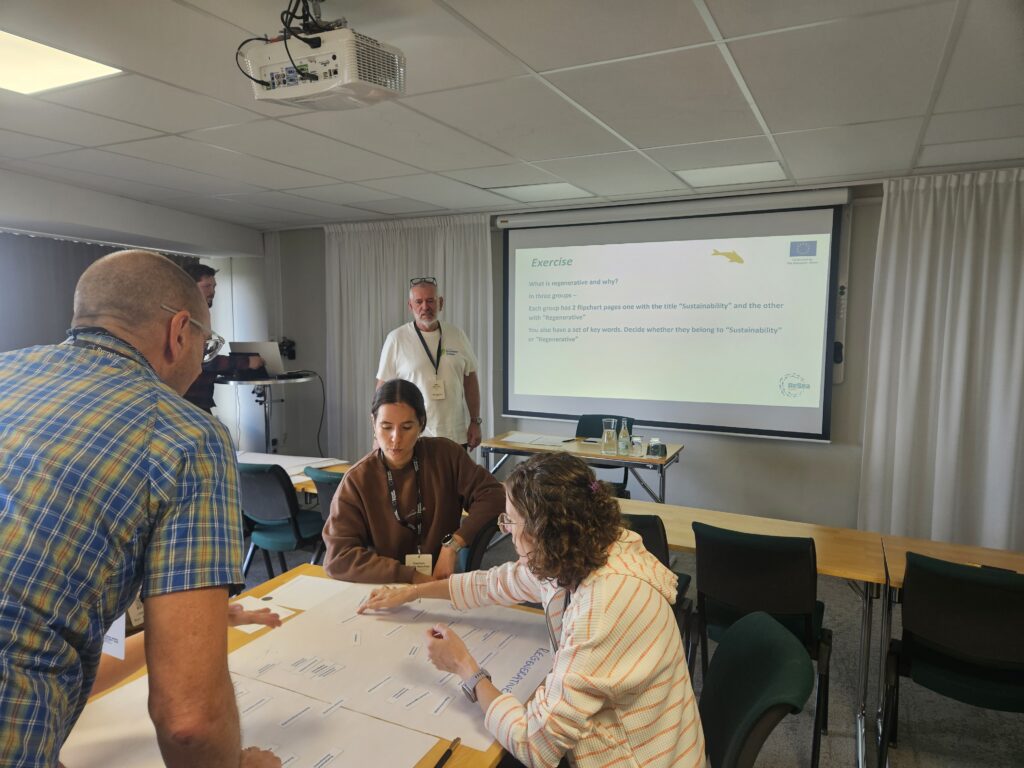
How can marine outdoor sports move beyond reducing their environmental footprint and become an active force for regenerating coastal ecosystems and communities? This question was at the heart of the ReSea Sports interactive workshop held during Outdoor Sports Euro’Meet 2026 in Sundsvall, Sweden.
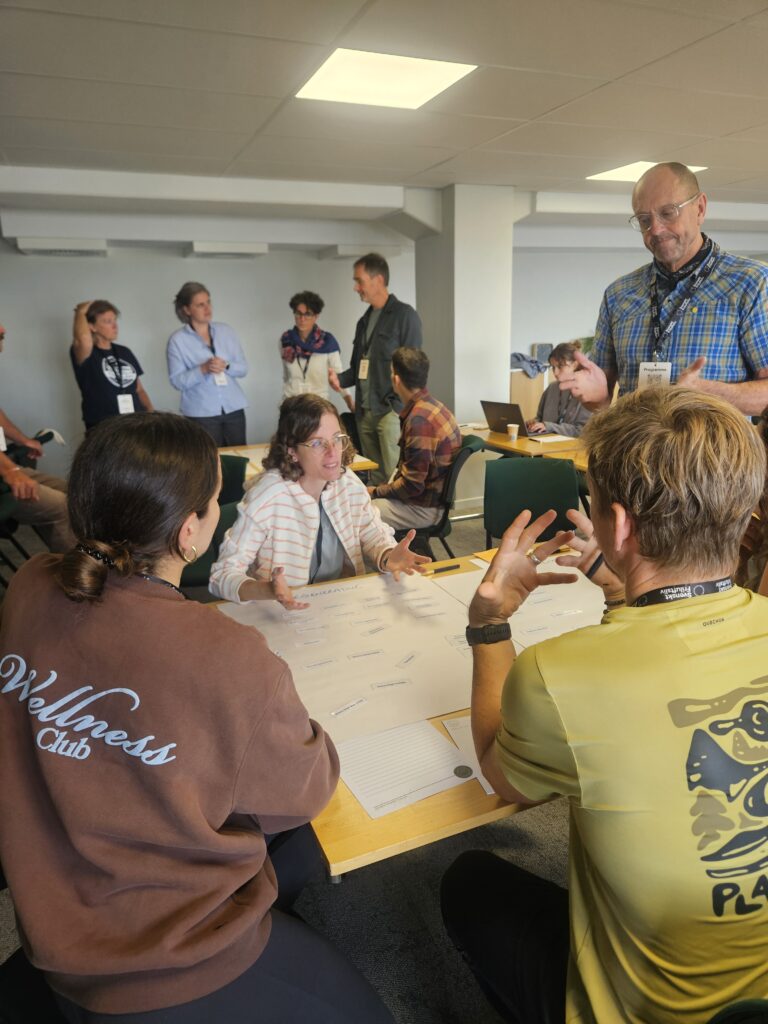
The session brought together around 20 delegates from different European organisations, representing a diverse mix of researchers, outdoor sports professionals, environmental and conservation organisations, and other actors connected to the management and development of outdoor recreation.
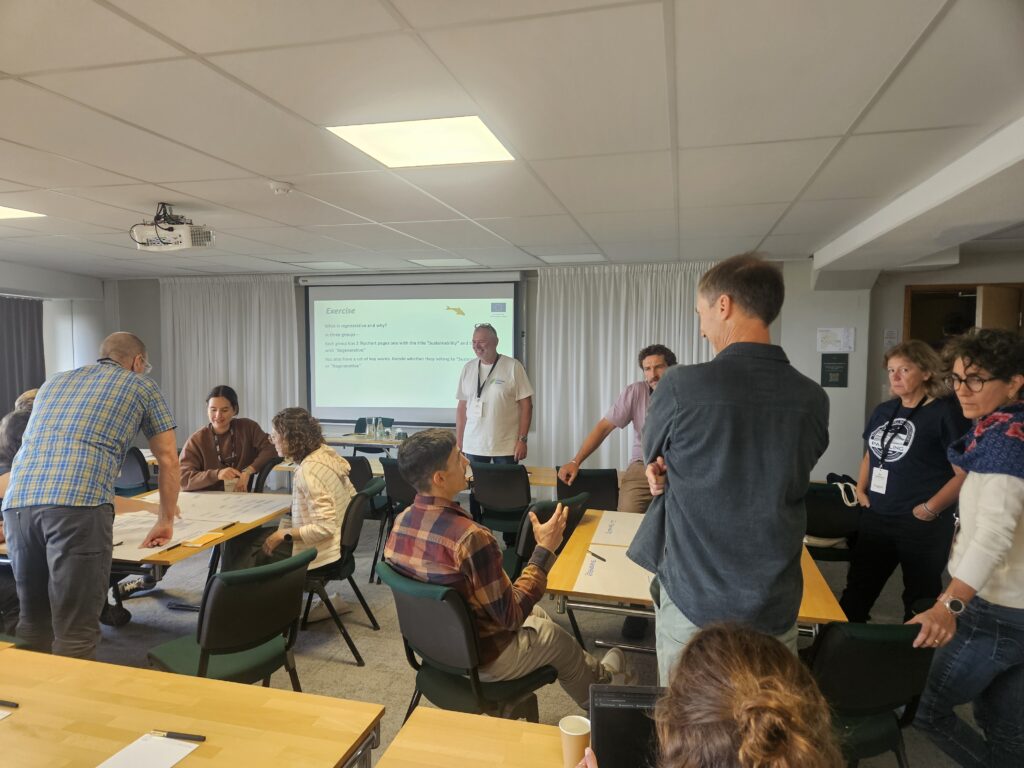
Rather than presenting ReSea only as a European project, the workshop was designed as a participatory space in which participants could explore, challenge and contribute to some of the core ideas that have guided the project since its launch.
Moving beyond sustainability
ReSea Sports is an Erasmus+ Sport initiative exploring how marine and coastal sports can become a force for positive environmental and social change. Inspired by regenerative tourism, the project seeks to move beyond conventional sustainability approaches focused mainly on reducing negative impacts. Instead, it asks how sport can actively contribute to healthier ecosystems, stronger communities and more resilient coastal areas.
This distinction provided one of the main starting points for discussion in Sundsvall.
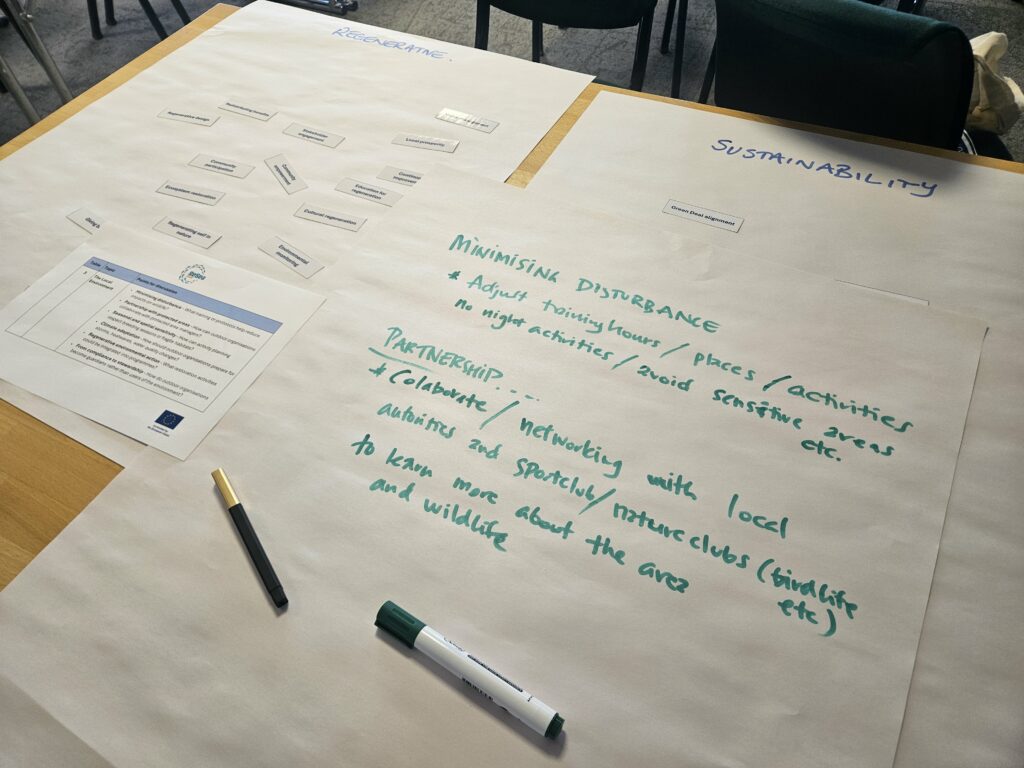
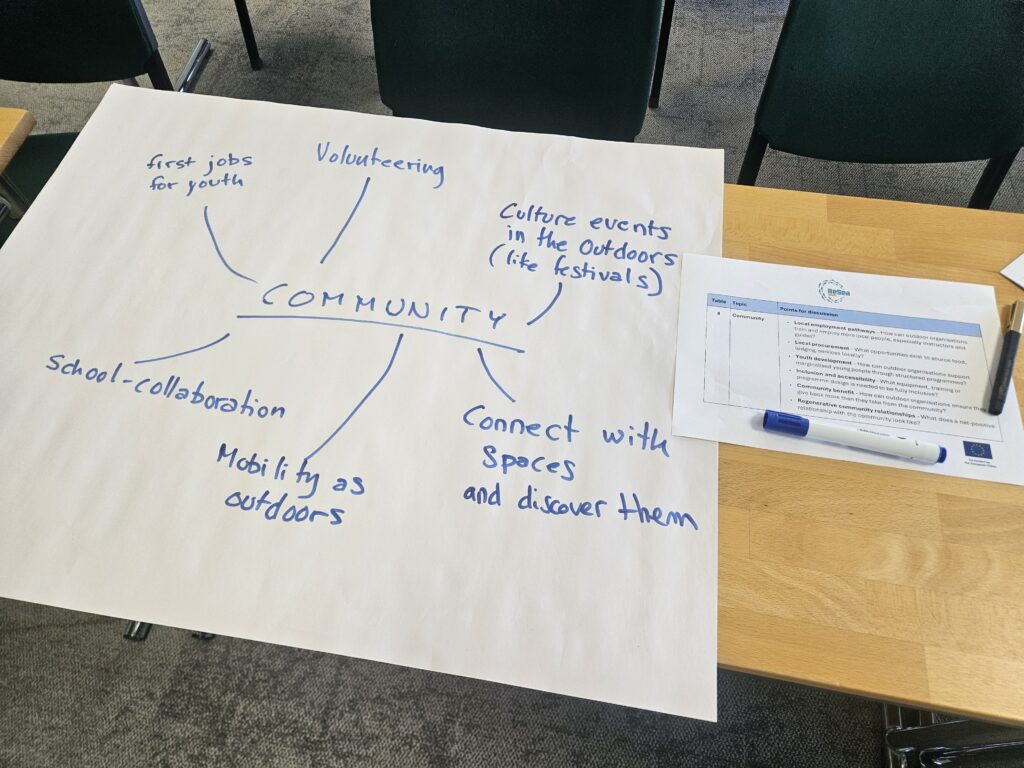
Participants reflected collectively on what “regenerative” actually means in the context of marine outdoor sports. Where does sustainability end and regeneration begin? Can every outdoor sports organisation adopt regenerative practices? And how can positive environmental impact be demonstrated rather than simply assumed?
The exchange highlighted that regeneration cannot be reduced to isolated actions such as beach clean-ups or awareness campaigns. Instead, participants discussed the importance of embedding environmental responsibility into the way organisations
operate, engage with communities, collaborate with authorities and understand the ecosystems in which their activities take place.
From ambition to measurable change
A central part of the workshop focused on one of ReSea’s key challenges: how to measure progress towards regeneration.
ENOS presented the Indicator and Monitoring System developed within the project, which allows participating organisations to establish a baseline, identify areas for improvement and follow their progress over time. The framework assesses seven interconnected dimensions: governance; carbon impacts and resources; the local environment; community; heritage; learning and well-being; and regulations.
Initial assessments involving 12 sports organisations have already provided valuable insights. In particular, the baseline work identified governance and the monitoring of carbon impacts and resource use as areas where organisations often require additional support.
These findings opened an important discussion during the workshop: regenerative ambitions need to be accompanied by effective governance, monitoring and evaluation mechanisms. Positive actions are important, but organisations also need the structures, partnerships and evidence required to understand whether those actions are creating meaningful long-term change.
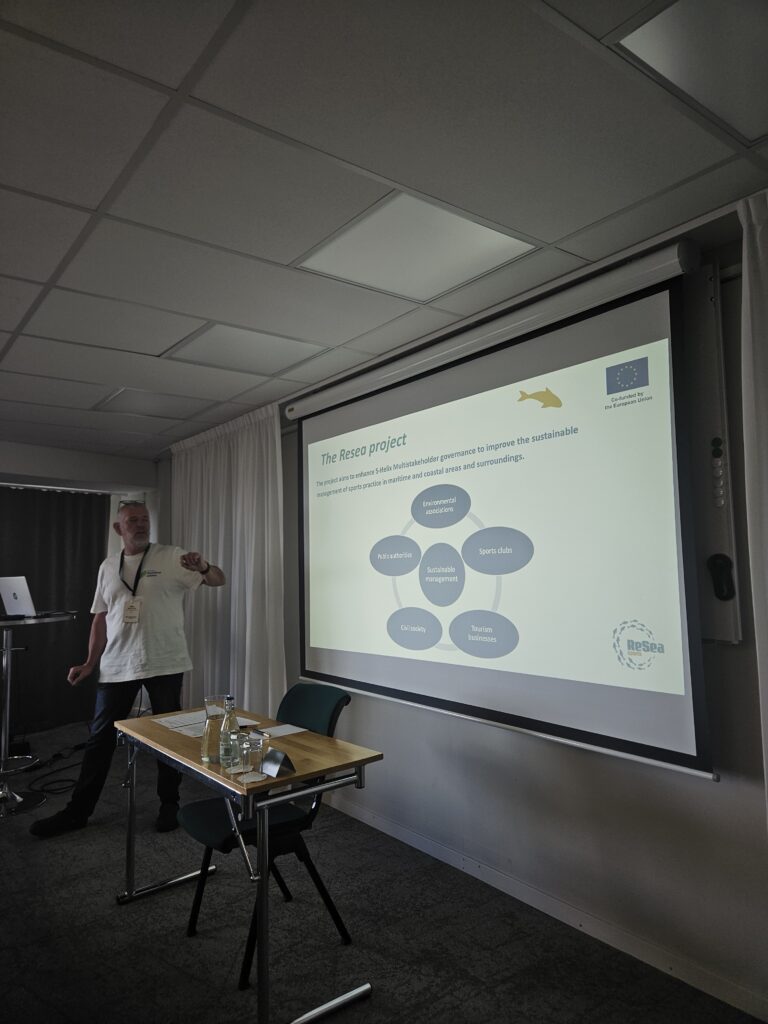
This reflects ReSea’s broader approach, which promotes collaboration between sports organisations, public authorities, environmental organisations, businesses, civil society and academia through a multi-stakeholder governance model.
Sharing what works – and taking it further
The workshop also provided an opportunity to present some of the activities, results and outcomes emerging from the project so far, including the experiences of pilot sites, the monitoring methodology and educational resources designed to support marine sports organisations in adopting more regenerative practices.
ReSea has now moved from its initial research phase towards implementation, with pilot activities and stakeholder engagement being used to test and refine the project’s methodology in real coastal contexts. An Environmental Education Programme has also been developed to provide sports leaders, trainers and organisations with practical knowledge and tools related to regenerative practice.
Perhaps one of the most encouraging outcomes of the Euro’Meet session was the interest expressed by participants in adapting or reproducing some of these approaches within their own organisations and territories.
That interest reflects one of ReSea’s broader ambitions: not simply to generate successful pilot activities, but to develop a practical model that can be transferred and adapted across the European marine outdoor sports sector.
The discussions in Sundsvall showed that the transition from sustainability to regeneration is still an evolving process. There may not yet be a single definition or pathway applicable to every organisation, sport or coastal territory. But bringing together research, practice, conservation and governance around the same table is an important part of that transition.